



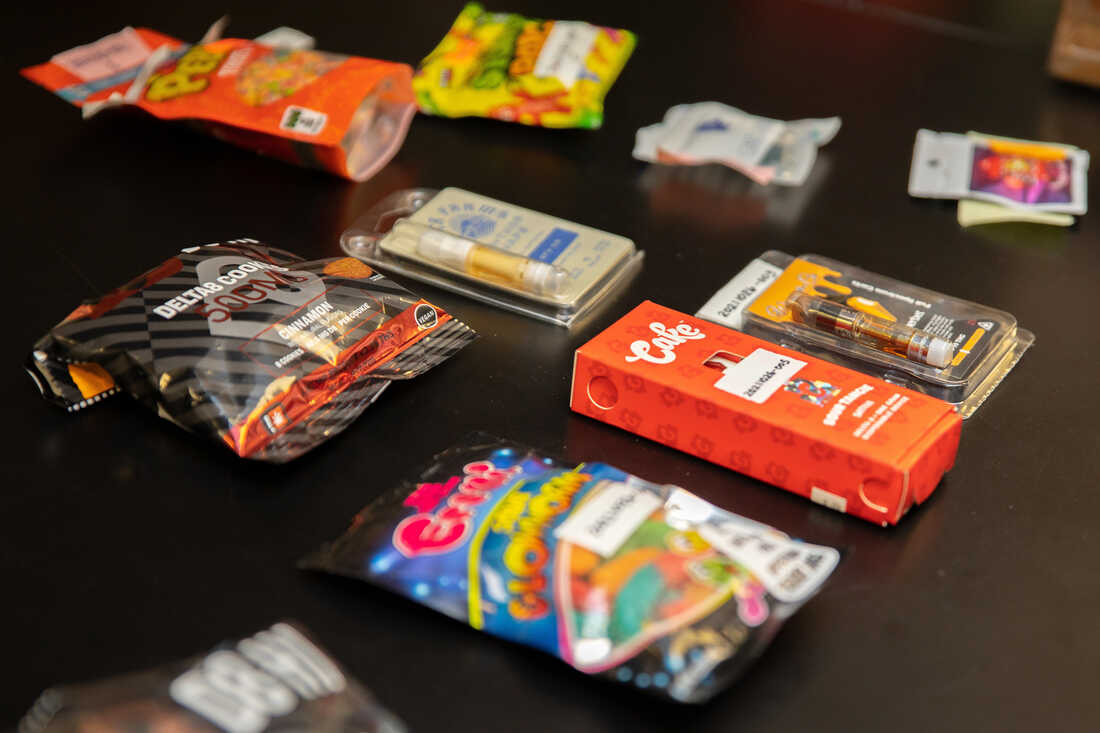
Delta-8 products are ready for testing at Virginia Commonwealth University’s Forensic Science Laboratory. These products come in different shapes and packaging, many of which are designed to look like candy or cereal. Crixell Matthews/VPM News hide caption
toggle subtitle
Crixell Matthews/VPM News
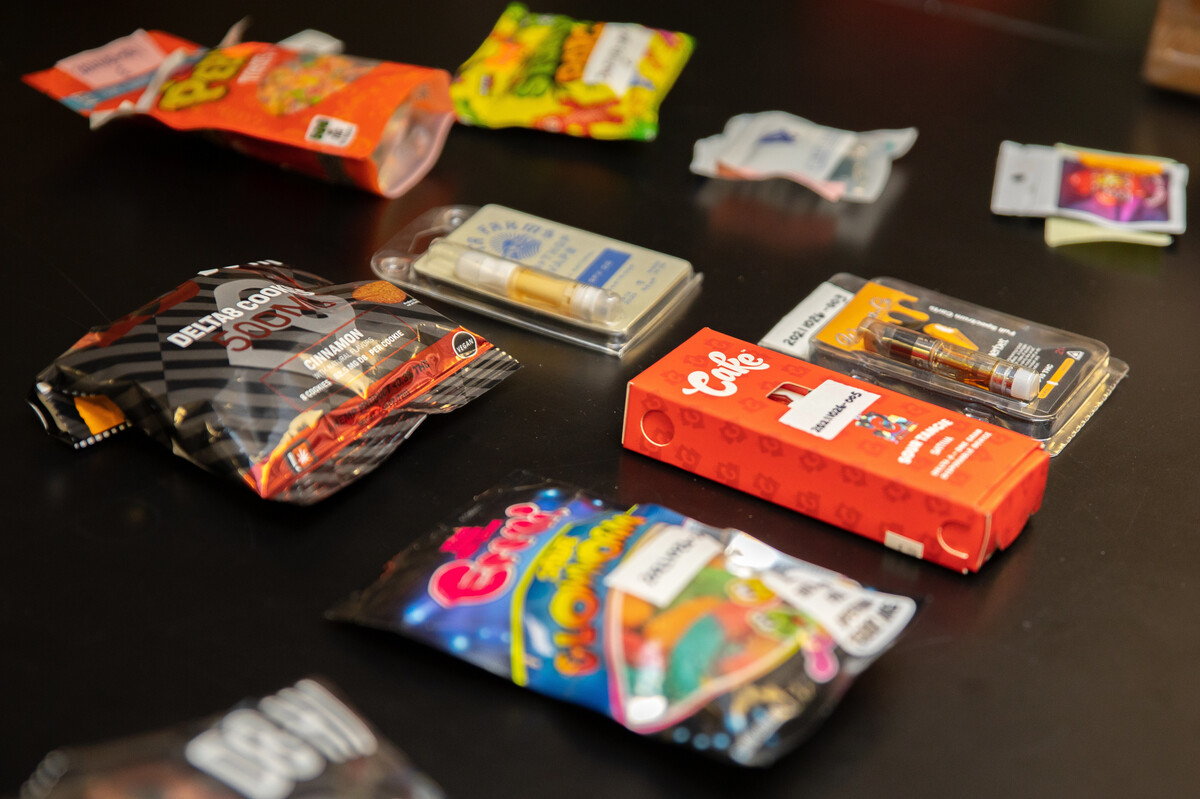
Delta-8 products are ready for testing at Virginia Commonwealth University’s Forensic Science Laboratory. These products come in different shapes and packaging, many of which are designed to look like candy or cereal.
Crixell Matthews/VPM News
Michelle Peace sometimes ducks into a convenience store and comes out with a handful of hemp products like delta-8. They come in gummies, tinctures, vape cartridges and joints and are designed to get you high.
Despite knowing the stares from the cashiers, Peace doesn’t head to a party. She is the director of the Forensic Toxicology Research Lab at Virginia Commonwealth University and brings her collection to the lab to see what’s inside. In some cases, no one else is checking.
Hemp products that can get you high have proliferated online and in corner stores, even in places where marijuana remains illegal. The products, marketed under names such as delta-8 and delta-10, have been a lifesaver for al struggling hemp industry. Even critics of the products acknowledge that some companies maintain high standards for their products, with credible lab testing and careful quality control.

Dr. Peace shows off one of the delta-8 products, highlighting specific aspects of the packaging that have the potential to confuse consumers. Crixell Matthews/VPM News hide caption
toggle subtitle
Crixell Matthews/VPM News

Dr. Peace shows off one of the delta-8 products, highlighting specific aspects of the packaging that have the potential to confuse consumers.
Crixell Matthews/VPM News
But federal regulators aren’t monitoring what’s in the products. Peace and other researchers have found problems ranging from irregular dosages to heavy metals. Some edibles have packaging and labels that mimic common candy or cereal (“Stony Patch THC Gummies” or “Fruity Pebblez”), and there have been an increase in calls to poison control centers related to delta-8. Newer products, such as THC-O, can be even more potent, according to Peace.
“Delta-8 is like, ‘Look at me, look at me,’ and there’s a monster behind the bush,” Peace said.
Still, a recent federal appeals court ruling appeared to uphold the legality of delta-8 products at the federal level. In the absence of clear federal regulations or guidance, state lawmakers like Colorado and Oregon have taken matters into their own hands with product bans.

Hemp plants thrive in the growing facilities of the Old Manchester Hemp Co. in Richmond, Virginia Crixell Matthews/VPM News hide caption
toggle subtitle
Crixell Matthews/ VPM News
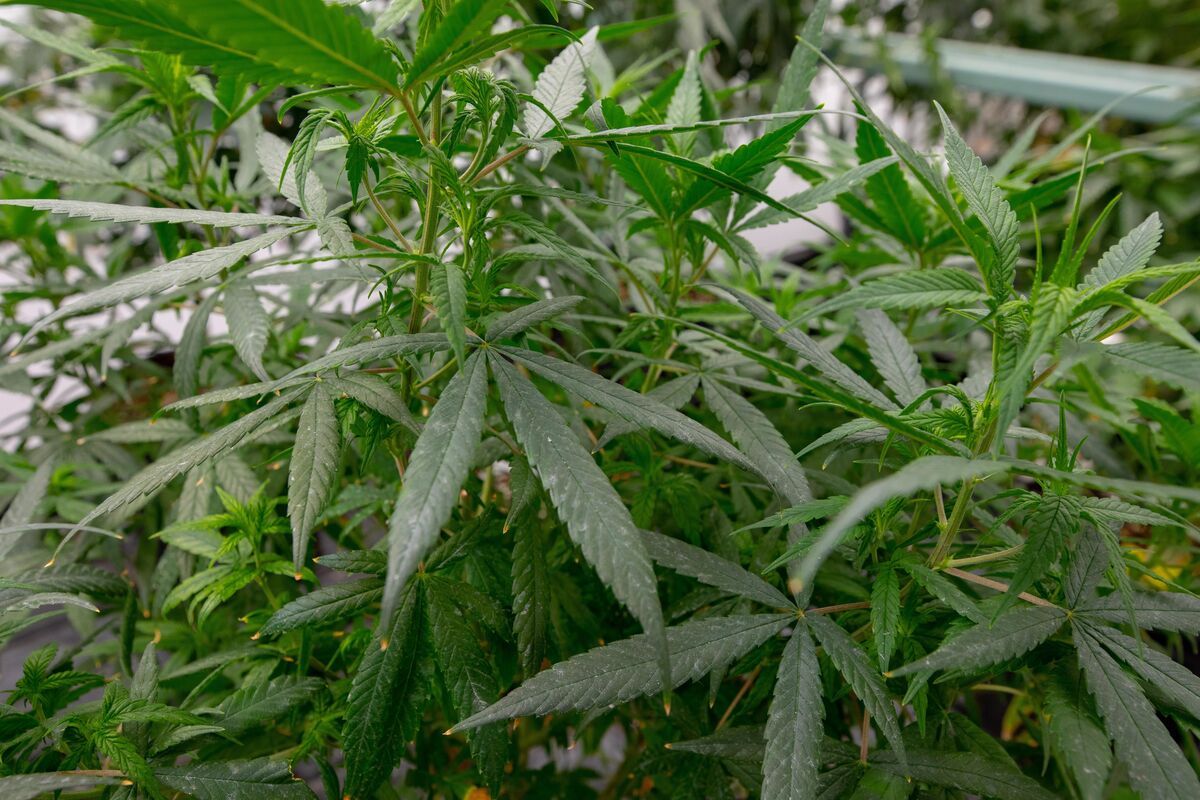
Hemp plants thrive in Old Manchester Hemp Co.’s growing facilities. in Richmond, Virginia.
Crixell Matthews/ VPM News
“There’s been a real battle in state capitols across the country to try to solve this problem,” said Jonathan Miller, general counsel of the US Hemp Roundtable.
Some in the hemp industry are struggling. State regulators Texas, Kentucky i Kansas are facing demands from the hemp industry for new restrictions. In Virginia, regulators were met with occasional jeers and outbursts of anger at a meeting earlier this month after announcing new restrictions on delta-8 edibles.
Some of the hemp entrepreneurs at that meeting said regulators were using bad actors to ruin an entire industry. Many advocated regulation rather than prohibition, which they argued would only hurt Virginia’s competitiveness relative to other states with friendlier laws.
“I’m about 45 minutes from the Tennessee border,” hemp processor Kerry McCormick told the Virginia Hemp Commission. “About 15 of my jobs are about to be outsourced to Tennessee. That will be on this committee.”

Anthony Miyares of Old Manchester Hemp Co. examines dried hemp buds. Crixell Matthews/VPM News hide caption
toggle subtitle
Crixell Matthews/VPM News
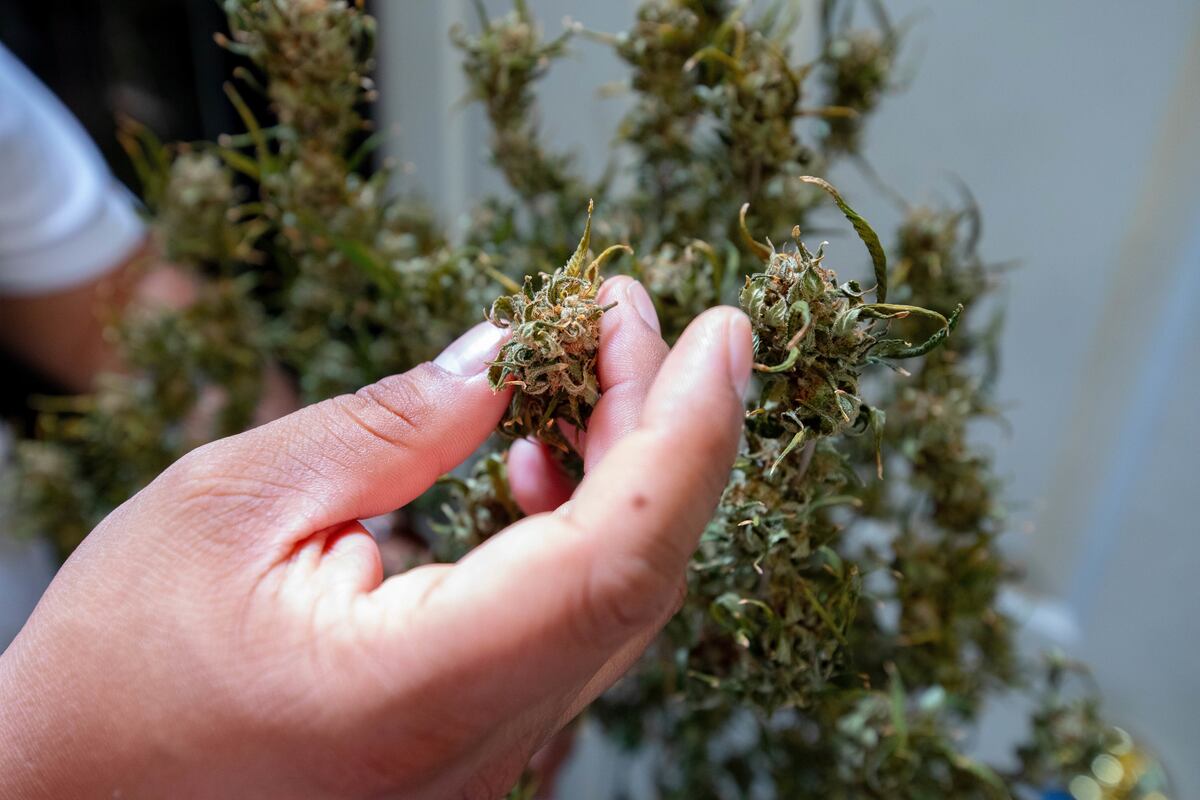
Anthony Miyares of Old Manchester Hemp Co. examines dried hemp buds.
Crixell Matthews/VPM News
The products stem from the 2018 federal farm bill legalizing hemp. The bill defined hemp as containing less than 0.3% delta-9 THC, the chemical compound in marijuana primarily responsible for the high. But the bill was silent on other psychoactive compounds such as delta-8 THC. It is found in small amounts in cannabis plants, but can be created in larger amounts by chemically synthesizing cannabidiol, a chemical more commonly known as CBD found in cannabis plants, in a process that involves acid, time and post-processing. Unlike THC, CBD does not create euphoria or intoxication.
Miller, who helped draft the 2018 legislation, said its authors had no intention of legalizing intoxicating products.

In Virginia, possession of marijuana is legal, but retail sales have not yet begun. But the state allows CBD products, like these in Richmond, to be sold if they contain less than 0.3% THC. Crixell Matthews | VPM News hides the caption
toggle subtitle
Crixell Matthews | VPM news

In Virginia, possession of marijuana is legal, but retail sales have not yet begun. But the state allows CBD products, like these in Richmond, to be sold if they contain less than 0.3% THC.
Crixell Matthews | VPM news
“I can assure you that as of 2018, neither I nor most of the people who were involved in crafting this legislation, like Senator Mitch McConnell. [R-Kentucky]I had an idea of what delta-8 THC was,” Miller said.
In May, California’s 9th Circuit Court of Appeals said that was no excuse. If Congress did not intend to legalize delta-8, “then it is up to Congress to fix its mistake,” the three-judge panel said. he wrote in its unanimous decision.
Miller said the 2023 farm bill could do just that by bringing scientists and regulators together to try to close the loophole. And last week, Senate Majority Leader Chuck Shumer introduced a bill decriminalizing marijuana that would also regulate products with other types of THC, such as delta-8 and delta-10, though it faces major hurdles to passage.
Some customers, like 23-year-old Sean Dudley, said the products are more appealing when legal marijuana isn’t available. Dudley said he tried delta-8 after moving to Wisconsin, where marijuana remains illegal, during a post-college funk.
“Ultimately, I found using delta-8 to be a much more introspective and enjoyable experience than any time I’ve used weed,” Dudley said.
Still, Dudley said he returned to legal marijuana after returning to Virginia, where possession of marijuana is legal but retail sales have not yet begun.
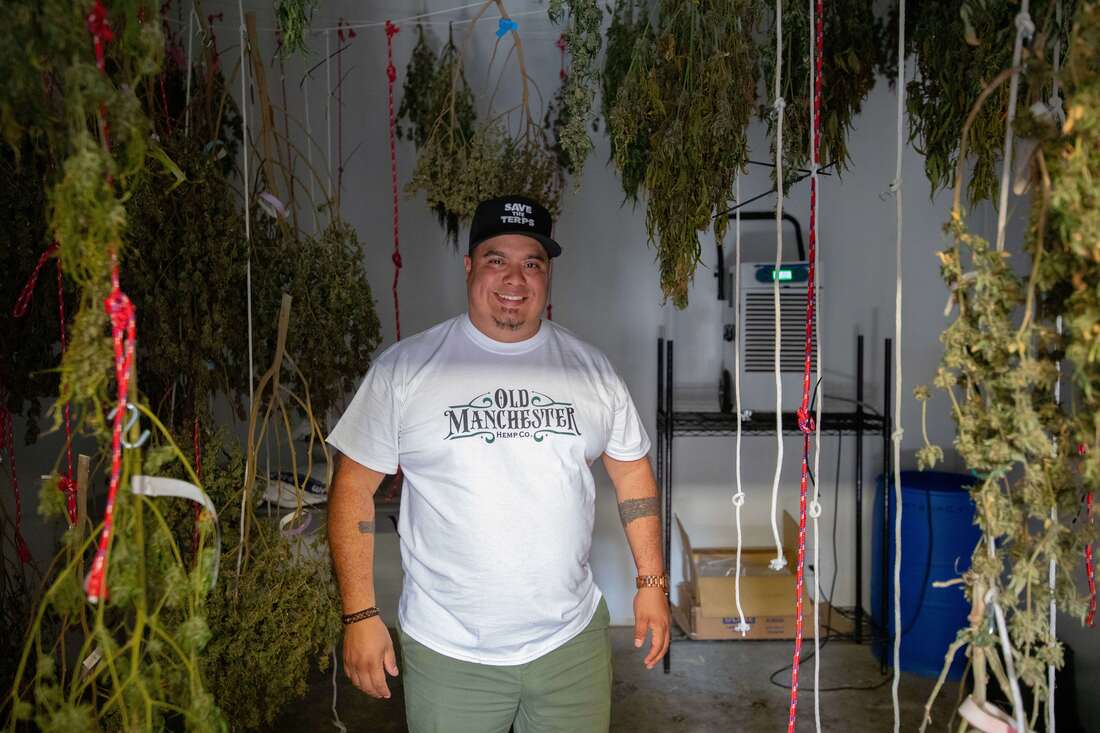
Anthony Miyares of Old Manchester Hemp Co. is surrounded by hemp plants hanging out to dry in the company’s warehouse in Richmond, Virginia. Once dried, the plants will be used to create a variety of consumer CBD products. Crixell Matthews/VPM News hide caption
toggle subtitle
Crixell Matthews/VPM News
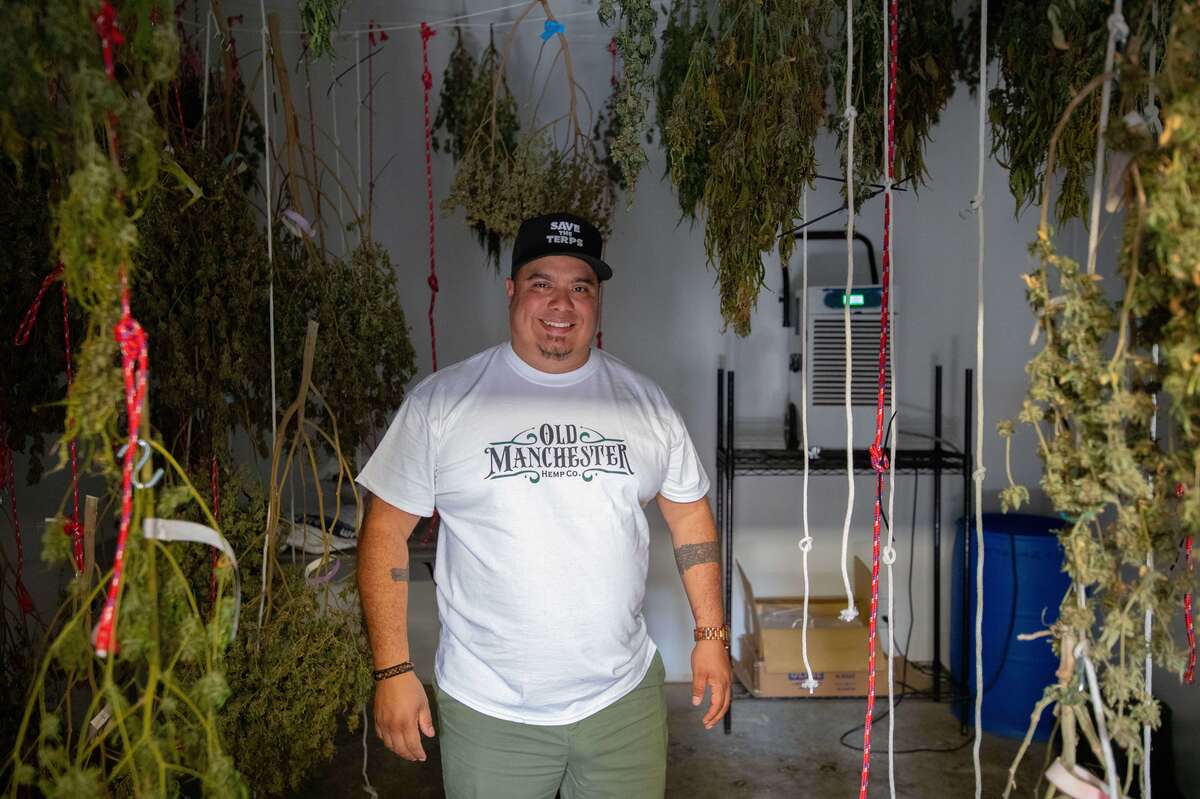
Anthony Miyares of Old Manchester Hemp Co. is surrounded by hemp plants hanging out to dry in the company’s warehouse in Richmond, Virginia. Once dried, the plants will be used to create a variety of consumer CBD products.
Crixell Matthews/VPM News
Some cannabis entrepreneurs say moving the needle on retail marijuana sales should be the focus rather than concentrating on products like delta-8. Anthony Miyares, who grows, processes and sells hemp products at the Old Manchester Hemp Company in Richmond, Va., would prefer to focus his activism on that goal in Virginia, where lawmakers in the divided state legislature did not agree on a way forward for retail sales of marijuana.
“I wish people would fight as hard to regulate cannabis,” Miyares said.